

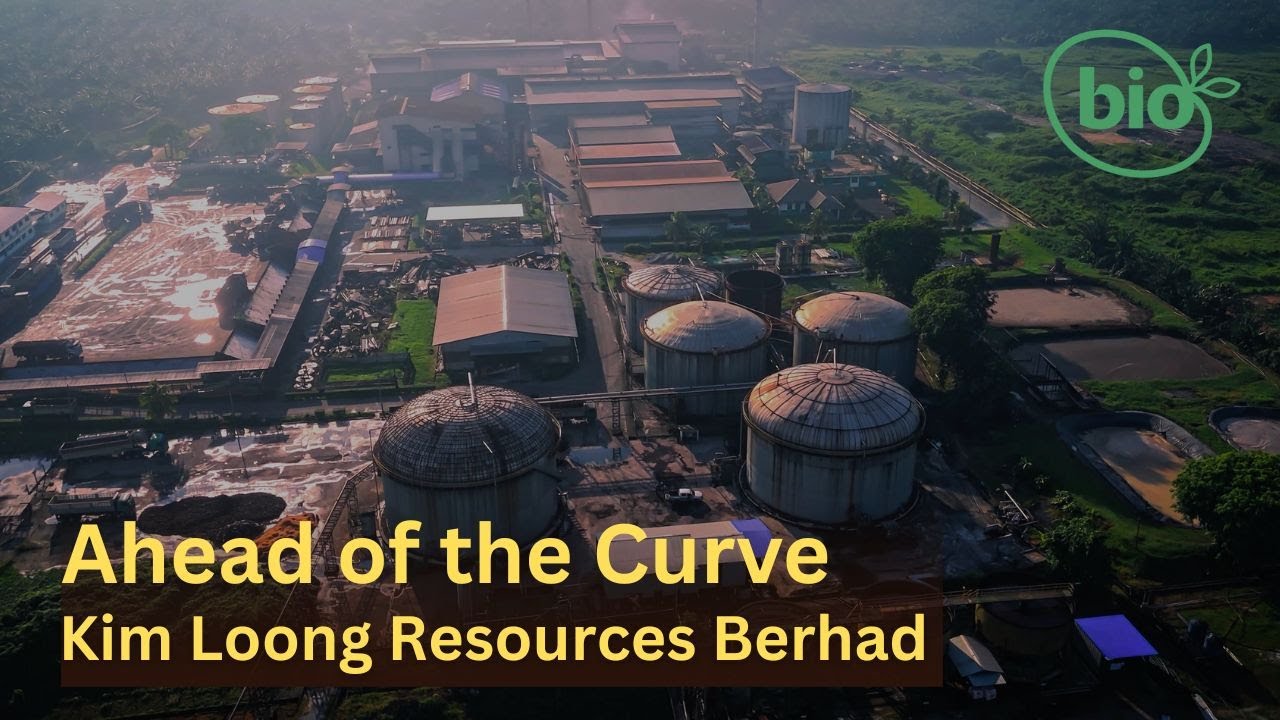
Ahead of the Curve
From biogas-to-grid projects to climate-smart estates, Kim Loong Resources Berhad shows how a mid-sized Malaysian palm oil company can turn net-zero ambition into a commercially viable strategy.
As Malaysia charts its pathway toward net-zero emissions by 2050, large plantation groups have been dominating the narratives. Less visible are the mid-sized producers, companies with fewer resources, yet equally exposed to tightening regulations, climate risks, and shifting market expectations. Within these constraints, however, some of the industry’s most practical and scalable innovations have emerged.
This is where Kim Loong Resources Berhad fits in.
Headquartered in Johor, Kim Loong operates plantations and mills across Johor, Sabah, and Sarawak.
For nearly five decades, the company has built a reputation for pragmatic, on-the-ground problem-solving, long before “net zero” became an industry buzzword.
From investments in waste recovery and grid-connected biogas capture to zero-EFB disposal and regenerative estate management, Kim Loong has treated sustainability as fundamental to building long-term resilience.
Along the way, it has earned industry recognition: from the “most innovative mill” and
the “highest OER (Oil Extraction Rate) mill” awarded by the MPOB (Malaysian Palm Oil Board),
to the “best compliance palm oil mill” by Malaysia’s DOE (Department of Environment). In 2022,
Kim Loong ranked third among Malaysian companies with the highest profit margin per hectare,
behind Wilmar and United Plantations (Malaysia Plantation Statistics 2022).
Behind the Innovation Mindset
Kim Loong traces its roots to a private holding company, Syarikat Kim Loong Sendirian Berhad, founded in 1967, with a 1,000-acre rubber plantation in Ulu Tiram, Johor. Oil palm planting began in 1968, followed by the incorporation of Kim Loong Palm Oil Sdn Bhd in 1977, and the opening of its first mill in Ulu Tiram in 1982.
In a classic story that echoes the age-old proverb: “necessity is the mother of invention,” the Ulu Tiram mill was where the seeds of innovation were planted.
“Our mill was too close to the town area with an expanding housing estate. Almost every day, we received phone calls (complaints), and the DOE would give me lots of pressure,” recalls Chang Chow Swan, the director and general manager of Kim Loong Palm Oil Mills. Trained in chemical engineering at National Taiwan University, Chang joined Kim Loong in 1988.
When freshly harvested FFB (fresh fruit bunches) are processed to extract crude palm oil, the mill generates by-products: empty fruit bunches (EFB), fibre and shells from the fruit, and palm oil mill effluent (POME), a wastewater produced during sterilisation and oil extraction.
Before tighter regulations and improved technologies, these by-products were treated largely as waste. EFB was burned in low-efficiency incinerators to produce “bunch ash” fertiliser or returned to the field as mulch. Some mills resorted to disposing of the EFB at dumping sites, releasing methane into the atmosphere as it decomposes.
Strong odour from open effluent ponds, and smoke from inefficient boilers and biomass burning were
the common complaints from surrounding communities.
“People were complaining about the white smoke coming out of the incinerator, and we don’t have a nearby plantation to use the EFB for mulching,” Chang adds. DOE had outlawed the use of incineration as a waste management option for sites built after 1992.

“When DOE withdrew our incinerator license in 1992, I had to find a solution,” Chang explained. Before joining Kim Loong, Chang had worked at Gemas Palm Oil Mill (renamed as Classic Palm Oil Mill) for 10 years.
“My then boss used to say, ‘if anything breaks down, don’t call me. You think of a way to settle it and
figure out the solutions,' ” says Chang. “I was trained to be hands-on, very independent, and to problem-solve.”
Traditionally, mills relied on fibre and shell to fire the boilers. Then, there was no existing machinery to process dry EFB into boiler fuel: for example, an EFB shredder and a drying system to reduce moisture. Chang and his team began modifying, designing, and fabricating their own equipment.
“It took us two to three years of trying and tackling problems one by one to get a breakthrough,” says Chang, the visionary architect behind Kim Loong’s mill designs in Kota Tinggi, Johor, and Telupid and Keningau, Sabah.
By the time the Ulu Tiram mill was relocated to Kota Tinggi in 1996, it could burn all the EFB for the boiler.
“There’s a saying in Chinese – ‘the more you do, the more mistakes you make; do nothing, and you make none at all’ (多做多错,少做少错,不做不错),” says Chang, who has carved out a formidable reputation for his waste-to-value innovations and engineering ingenuity in the milling industry over four decades.
“But that’s not my character. I’m willing to take on challenges and, well, solve them! ”
“It helps that my bosses are engineers,” he adds with a chuckle. “We speak the same language. They are very open to ideas and give us the space and time to do R&D.”
"Kim Loong stood out as a mill group that not only values efficiency
but also long-term sustainability. They demonstrate how a commercial mill
can lead innovation that benefits both business and smallholders."
Breaking New Ground
The same ethos shapes Kim Loong’s operations as it continues to deliver breakthroughs and scale solutions while keeping environmental impacts at bay.
In 2002, the Kota Tinggi mill was awarded the ‘Most Innovative Mill’ by MPOB for its proprietary FFB grading conveyor, designed to sort out low-grade FFB and black bunches more efficiently. Recently, Chang visited a mill that uses the latest AI (Artificial Intelligence) grading machine, which uses the same conveyor system.
“Looks like we were 22 years ahead! The only difference now is that the system replaces human vision inspection with AI-controlled CCTV,” says Chang.
Kim Loong was also the first mill to successfully implement solvent extraction to recover residual oil from palm fibre – a process recognised in research but rarely commercialised due to operational challenges.
“It took us two months to troubleshoot and achieve the breakthrough,” says Chang. “Now we are able to generate a monthly profit from the solvent extraction plant."

Today, all Kim Loong mills operate with zero EFB disposal.
"All empty fruit bunches are shredded and pressed to minimise oil loss and converted into downstream products such as long fibre and dry shredded fibre,” says Wong Wai Chew, the Kota Tinggi-based mill manager. Long fibre
is exported to China for use in mattresses and car seats, while dry shredded fibre is used as biomass fuel.
“This not only improves mill efficiency, but creates additional income streams, and reduces our carbon footprint
by turning waste into green products,” says Wong. “The price for by-products is low, so we need to sell a huge volume to make a profit. But we can be self-sustaining. More importantly, we’re not polluting the environment.”
Of course, not every project succeeds. For instance, the palm kernel crushing project in the Kota Tinggi mill and the Telupid, Sabah composting project were shut down because operating costs far exceeded the returns.
From Methane Capture to Renewable Energy
As early as 2006, Kim Loong had drawn up a blueprint for an integrated methane capture and power generation system to reduce methane emissions and generate renewable electricity.
Conventionally, palm oil mill effluent (POME), a nutrient/organic-rich wastewater, is treated using open lagoons or tanks (open ponding system), releasing biogas to the atmosphere during the anaerobic breakdown. Uncaptured biogas consists of 60%-70% methane (CH4 ), a GHG (Greenhouse Gas) that causes global warming.
In 2009, 96% of mills still relied on these methods, according to MPOB.
Under this project, Kim Loong’s strategy was to convert the open tanks to closed anaerobic digesters (biogas system), and the methane will be captured, collected, and used for on-site heat and power generation.
At that time, there were only two palm oil mills in Malaysia that had biogas projects, Chang added.
“Sime Darby abandoned the project after one or two years. Keck Seng’s biogas project has been running successfully till today. But our request to see their biogas plant was turned down,” he adds. Undeterred,
Chang and his team travelled to India to visit a biogas factory.
“India had been doing industrial biogas for 20 years by then. They were very open and willing to share their knowledge.”
Back in Malaysia, Chang and his team researched, designed, and constructed the biogas plant, even sourcing the biogas engine from China. In 2007, the Kota Tinggi biogas plant in Kota Tinggi was registered under
the UN-backed CDM (Clean Development Mechanism) project, making it the first POME-biogas CDM project (Chin, May Ji et al. 2012; Table 4) in Malaysia. Established under the Kyoto Protocol, CDM allows emission-reduction projects in developing countries to generate certified carbon credits, which can be traded or used for meeting climate targets.*
Research shows that biogas capture from mill effluent remains one of the most effective ways to cut GHG emissions in palm processing while delivering renewable energy and revenue.
By 2019, all Kim Loong plantations and three mills had obtained the Malaysian Sustainable Palm Oil (MSPO) certification, and the Kota Tinggi biogas plant started supplying power up to 1.8 MW to the national grid (TNB). This was followed by the Keningau Mill biogas plant in 2022, supplying up to 2 MW to Sabah Electricity, and the Telupid mill in 2023, supplying 1.5 MW. Together, biogas plants, steam turbines, and biomass boilers generate more than enough power for mill operations, with surplus electricity for sale. In Fiscal Year 2025, grid-connected renewable energy generated RM 10.58 million in revenue (Annual Report 2025).

As of 2025, 170 of Malaysia’s 446 palm oil mills had installed biogas facilities (April 25, 2025, New Straits Times), cutting “GHG emissions by 4.9 million tonnes of carbon dioxide (CO₂).” Out of this number, 71 mills are grid-connected.
“At Kota Tinggi mill, we generate additional revenue by selling electricity to TNB,” says Wong. “But the decrease in FiT (Feed-in-Tariff) rate combined with increasing maintenance and spare parts costs has reduced the financial feasibility.”
To reduce costs and minimise downtime, Kim Loong is trialling alternative engine oils to extend maintenance intervals.
“But having more downstream activities also means more workers are needed, Wong adds. “With the current foreign worker crunch, we’re looking at automation, and offering better pay and benefits to attract and retain workers.”
“The WAGS BIO plots’ yields are 15 to 20% higher compared to the conventional plot,” says KLKPD Senior Estate Manager **Reghu KC Balakrishnan.
“But the operating costs are slightly higher than conventional plots due to the labour-intensive nature of
BIO methods,” Balakrishnan added. Manual weeding and monthly application of juice enzymes and fish fertiliser require more manpower. To scale adoption, Kim Loong is exploring other means to improve the efficiency of the BIO regime, like using pumps and developing a commercial model that keeps BIO financially viable.
“The (undulating) terrain here limits mechanisation,” he explains. “But we can scale up BIO plots at our Keningau estate, which is 90% flat, which may solve the labour crunch issues.”
Building on earlier successes, the company grew more confident in testing new ideas. Wild Asia recognised that EFB composting is capital intensive for mills, and that decanter cake and EFB, while both valuable, are typically returned to the field separately.
“With guidance from a global soil expert experienced in industrial vermicomposting, we explored a simple but powerful principle: combining these waste streams creates a carbon-nitrogen balance that produces ideal earthworm food,” Wild Asia Executive Director Dr Reza Azmi explains.
This became the basis of the next WAGS BIO trials – optimised mill-waste blends applied directly in the field
(in the form of earthworm beds). As predicted, these early trials are already showing promise, with improved bunch weights and higher earthworm populations.
“Even with zero EFB disposal (as in Kim Loong’s case), there’s still room to optimise,” says Reza. “The next frontier isn’t just reducing waste, but maximising how recycled materials regenerate soils and store carbon.”
In other words, Kim Loong has shifted from waste management to regenerative resource management, closing
the loop in ways that support both environmental outcomes and long-term productivity, he added.
Findings from the trials are expected in early 2026.
Regeneration at Estate Level
Kim Loong manages eight estates, spanning 16,988 ha, in Johor, Sabah and Sarawak. All plantations adopt sustainable practices such as zero burning; integrated pest management (IPM) using nature-based solutions like beneficial plants to tackle pests; and applying EFB, bio-fertilisers, and compost to enhance soil organic matter.
In FY 2025, average FFB yield reached 20.69 MT per hectare, well above Malaysia’s national average of 16.70 tonnes (MPOB, 2024).
Since 2020, Kim Loong has been working with Wild Asia to pilot WAGS BIO trials at Sabah-based
Kim Loong-KPD Plantations Sdn Bhd (KLKPD). A Kuala Lumpur-based social enterprise, Wild Asia partners with independent smallholders, businesses, and supply chain actors to scale inclusive, traceable, and biodiverse palm oil. The seeds for this collaboration began in 2015 when Kim Loong sought help from Wild Asia to meet external sustainability standards.
WAGS BIO advances regenerative agriculture by testing nature-based solutions, learning from field results, and scaling approaches that deliver both ecological and economic benefits. Unlike commercial companies, WAGS BIO does not sell products; its mandate is impact: expanding regenerative practices and growing measurable carbon sinks within managed supply chains.
The senior management endorsed the first trials back in 2019, setting aside the first WAGS BIO plots totalling 5.25 hectares and one ‘control’ (conventional) plot on their Telupid estate. They adopted methods such as manual weeding using a grass cutter, cut-and-drop, and decanter cake, EFB, and enzyme fertiliser applications.
Findings from the 2024 WAGS BIO Annual Report (data from 2022-2024) show notable shifts in soil health: improved soil structure, moisture retention, and water infiltration. The earthworm populations more than doubled, indicating enhanced soil fertility and biological activity. The trees also showed fewer signs of nutrient deficiency and pest damage.

Strategic Partnership
With 95% of its FFB sourced externally, traceability remains a key challenge for Kim Loong.
“Talking about transparency, it’s not easy. FFB dealers are not willing to share supplier data due to business relationships and concerns of confidentiality,” says Chang. “But we are working with Wild Asia to solve this problem.
Using the WAGS APP traceability platform, Wild Asia will help Kim Loong map and register their smallholder and dealer suppliers, ensuring every tonne of FFB is traceable to its origin – a critical step for ESG and EUDR compliance.
“Traceability isn’t a one-time checklist. It’s a dynamic relationship-building tool that helps mills continuously engage their suppliers, strengthen transparency, and transform their supply base from merely compliant
to truly regenerative,” Reza adds.
The Kim Loong-Wild Asia partnership reflects a shared vision to move beyond compliance by piloting practical, regenerative solutions that improve yields, cut emissions, and restore soil health.
“Kim Loong stood out as a mill group that not only values efficiency but also long-term sustainability,” Reza adds. “They are willing to test new ideas, learn from results, and scale what works. They demonstrate how a commercial mill can lead innovation that benefits both business and smallholders.”
Where Sustainability Strengthens Profitability
Kim Loong’s operational efficiency and long-term sustainability investments have translated into strong financial performance. In 2022 and 2023, the company was recognized by Forbes Asia under its “Asia’s Best Under A Billion” list, which highlights Asia-Pacific companies with revenues below USD 1 billion that demonstrate consistent growth and financial resilience.
In 2024, the company also clinched the “The Edge Billion Ringgit Club (BRC) Awards” for the
highest growth in profit after tax over three years for the plantation sector. (The Edge Malaysia, Sept 2024).
Kim Loong had previously won the BRC award for “highest return to shareholders in the plantation sector” for three years in a row, from 2016 to 2018.
For long-serving employees like Wong, Kim Loong’s defining strength lies in its investment in people – from worker welfare to the growth and development of engineers, estate managers and support staff.
“I joined the company 25 years ago, and we built the Kota Tinggi mill from scratch,” says Wong, who regards Chang as his mentor. “It’s been a constant challenge, but also a place to learn and grow because our bosses are willing to invest in us.”
“They really reward us and are willing to share the profits,” adds Chang, who has been with Kim Loong for 37 years. “That's why at the end of the day, we are willing to work, and we are happy.”
Staying Ahead of the Curve
Moving forward, the company’s long-time strategies are anchored by continuous learning, collaboration, and improvement.
“We will continue to invest in R&D to improve mill efficiency, and test green technologies that can benefit both our operations and the environment,” Chang concludes.
In its Annual Report (FY2025), Kim Loong disclosed its greenhouse gas (GHG) emissions data for the first time. These figures will serve as a baseline to track progress in the years ahead.
“We’ll also actively participate in industry platforms and discussions to learn and contribute wherever we can toward more sustainable palm oil practices across the sector.”
Footnote
*The UN-backed carbon credit system has since been replaced by the Paris Agreement Crediting Mechanism (PACM) in 2024. CDM projects are allowed to transition to PACM status.
**KLKPD Senior Estate Manager Reghu KC Balakrishnan retired from Kim Loong in August 2025.

This story is part of the Malaysian Sustainable Farmer Chronicles farmer profile series, a collaboration between Wild Asia and the Malaysian Palm Oil Council that shares the innovations and best practices of MSPO–certified smallholder farmers in Malaysia.